Articles
- How To Remove Roof Moss Popular Mechanics June 2007
- How to Remove and Prevent Black Algae Stains on Asphalt Shingle Roofs (links to Today's Homeowner site)
- ASK The Family Handyman, The Family Handyman Magazine, May 2004
- More On Roof Moss, The Washington Post, August 1999
- Streaky Shingles, The Family Handyman, March 1995
- More on Roof-Shingle Moss, Popular Mechanics, March 1994
- Moss Problems on Wood Roofs, Popular Mechanics, April 1991
How to Remove Roof Moss
Popular Mechanics June 2007
Q: I live in the Pacific Northwest where many homes, including mine, have moss growing on the roof. Is there a chemical I can spray to remove the moss?
A: Your best bet is to follow a three-step moss-control process: kill it; remove it; prevent it. Here's how.
First, proceed cautiously when applying chemicals for any purpose. It's best to first try the least toxic product you can find before resorting to more drastic measures. For moss, I recommend a soap-based agent called Moss Aside (gardensalive.com), which can be applied in the spring or fall using a garden sprayer, mop or brush. No matter what product you use, try it on the least visible part of the roof first.
After the moss is dead, it can be carefully flushed off the roof with a pressure washer. The pressure washer has to be pointed down the roof or else you run the risk of driving water under the shingles. You'll have to actually stand on the roof to do this, which makes this a potentially dangerous job.
After the roof is clear, install zinc strips at the peak and at down-roof intervals (z-stop.com) to inhibit future moss growth. The strips release zinc carbonate into rainÂwater washing over the roof. The chemical is deposited on the shingle granules and prevents or greatly reduces moss growth.
Ask The Family Handyman
The Family Handyman Magazine, May 2004
 Q What 'is causing these dark streaks on my roof? Are they harmful. and how can I get rid of them?
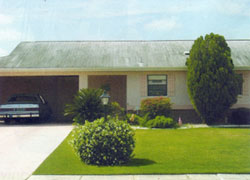
A These ugly, dark streaks on an asphalt shingle roof are not a defect in the shingles or a sign of a bad shingling job. It's algae that causes the roof to look bad. Some experts say algae may cause shingles to deteriorate prematurely.
This type of hardy, blue-green algae (Gloeacapsa magma) thrives in warm, humid climates. In the Midwest, it normally appears on a north slope where shade and moisture support its growth. However, the problem is most severe in the southeast Gulf states, where entire roofs can be covered in as little as four years. The algae feed on inorganic filler materials such as calcium carbonate in asphalt shingles.
Cleaning with a 10 percent bleach solution works for a year or two, but foot traffic and scrubbing during application will damage your asphalt shingles, and the solution can harm plants and surfaces below.
Zinc also prevents the growth of algae, so another option is to install a zinc strip along the ridge of the roof. Rain hits it and carries zinc carbonate down the roof. It won't wipe out algae that already has a foothold, but it'll stop new growth. Check out Z-STOP strips (800-845-5863), www.z-stop.com).
More On Roof Moss
The Washington Post, August 1999
We have a problem with moss growing on roof shingles, mainly on the north and east sides, which are shaded most of the day. We will be building a new home in a wooded (and shaded) area in the same community and would like to prevent this problem on the new home.
Roof moss is a common problem. Experts used to recommend stretching copper wire horizontally about every five feet across the roof. One product that appears to be easier to install and more effective can be used on new or old roofs. Z-STOP is a roll of zinc strip 21/2 inches wide by 50 feet long. You fasten it to the roof on both sides of the ridge cap. Each roll comes with zinc-coated, rubber-gasketed roofing nails to apply it to the roof. An average roof requires about three rolls. It can be used on all wood, composition, concrete, metal or flat tile roof shingles. However, it is not suited for Spanish Tile roofing products because their shape does not allow rainwater to flow continuously from the ridge cap all the way down the roof. For more information, contact Z Stop, Wespac, Lynnwood, WA 98037 or call toll free (800) 845-5863.
Streaky Shingles
The Family Handyman, March 1995
I have gray asphalt shingles on my roof, or at least they used to be gray. Now, there are dark streaks all over my roof. What's causing this? I tried pressure-washing them last year but now the problem is back. What can I do?
The dark streaks you describe are most likely algae growth, which can be a problem nationwide. The algae appears in black bands leading from the peak to the eaves. Usually you'll find the problem on the most humid side of the roof where there is no direct sun exposure.
If your roof has older galvanized steel roof vents, you may have noticed that the area directly beneath the vents is free of algae growth. This is due to the zinc coating on the vent. The observation that algae doesn't grow near the zinc coating led to the development of a product called Z-Strip. It's sold at roofing supply companies (see the Yellow Pages under "Roofing Materials"). The 2 1/2" wide strips, made from a zinc alloy, are nailed across the top of the roof near the ridge. These strips release zinc carbonates, which are carried down the roof by rainwater and keep the algae from growing.
The zinc strips will prevent new streaks, but not get rid of existing ones. You'll need to get on the roof with a secure ladder and clean them with a bleach solution. If you have a steep roof, or are uncomfortable with heights, you could hire a professional roofing contractor to clean it. It will cost about $300.
Protect your plants below the roof with a plastic tarp. Choose a cool day so the plants don't cook under the tarp.
Scrub the asphalt shingles using a non-metallic brush with a solution of 1 gal. household bleach, 2-1/2 gals. of water, and 1 cup of ammonia-free detergent. Starting at the top and working your way down, pour the solution on an area and scrub it, being careful not to damage the shingles. Clean the roof in sections and rinse it with a garden hose. For more information, contact Z Stop, Wespac, Lynnwood, WA or call toll free (800) 845-5863.
More On Roof Shingle Moss
Popular Mechanics, March 1994
We have a problem with moss growing on our roof shingles. The moss is growing mainly on the north and east sides, which are shaded most of the day. We will be building a new home in a wooded (and shaded) area in the same community and would like to prevent this problem on our new home
Inquiries regarding roof moss are among the most common that we receive here. In discussing this in past Homeowners Clinics, we have recommended stretching bare copper wire horizontally about every 5 ft. across the roof. However, we've recently learned of a product that appears to be easier to install and more effective. And, as an added bonus, it can be used on new or old roofs.
The product, Z Stop, is a roll of zinc sheet 2 1/2 in. wide x 50 ft. long. You fasten it to the roof on both sides of the ridge cap. A roll costs about $30. Each roll comes with sufficient zinc-coated, rubber-gasketed roofing nails to apply it to the roof. An average roof requires about three rolls. It can be used on all wood, composition, concrete, metal or flat tile roof shingles. However, it is not suited for Spanish Tile roofing products because their shape does not allow rainwater to flow continuously from the ridge cap all the way down the roof. For more information, contact Z Stop, Wespac, Lynnwood, WA or call toll free (800) 845-5863.
Moss Problems On Wood Roofs
Popular Mechanics, April 1991
Moss and mildew love a moist climate, so moss or mildew growing on your wood roof indicates that your roof is not draining well after a rain. Sources of roof moisture can be a lack of sunlight to dry the roof deck (usually caused by trees or adjoining buildings that shade your roof) or the result of leaves, twigs or other debris that collect on the roof and hold moisture. Additionally, the spaces between shakes or shingles are meant to aid water runoff. Leaves and other debris that block these paths also block good drainage and prevent proper runoff.
The first step to a dry, moss-free wood roof is to cut away any branches that overhang the roof and block out sunlight. Exceptionally thick limb growth on trees should be remedied by a professional tree trimmer who can selectively thin the branches so that sunlight can filter down to the roof deck. This thinning of treetops can also open the space to better ventilation, and proper ventilation or airflow across the roof aids the drying process.
The next step is to inspect the roof for debris that may be trapped in valleys, behind chimneys or in the cracks between the shakes or shingles. Vegetable debris, such as leaves, acts like a sponge on the roof surface, soaking and holding moisture in the cracks or gaps between shingles. This can be alleviated by trimming back tree limbs, but it may be necessary to powerwash the roof once or twice a year to keep it clean and free of debris.
A product commonly used in the far West is a strip of metal that is 99% pure zinc. The zinc strip is nailed at the edge of the ridge or below the level of anything that blocks water flow, such as vents or chimneys. As rainwater washes down the roof, it picks up zinc from the strip, and the zinc inhibits future moss growth.
One such product is named Z-STOP and manufactured by Wespac, Lynnwood, WA. To use Z-STOP, first power-wash or brush away the existing moss. (For severe cases, you can buy a herbicide from your local garden center that will kill moss.) Then use roofing nails with neoprene washers to nail the Z-STOP in place along ridges, gables or skylights. (Z-STOP nails are included with each roll of Z-STOP). For more information, contact Z Stop, Wespac, Lynnwood, WA or call toll free (800) 845-5863.
Z-STOP Zinc Strip (50 Foot Roll) For Roof Moss Control:
- Highly cost-effective, particularly when compared to the expense of roof repairs or replacements.
- Long-lasting, with a lifespan of over 20 years.
- Easy to install, making it a hassle-free solution.
- Completely safe for roofing shingles, unless you are moss, algae, or fungus.
- Safer and more effective than chemical moss control or moss killers used in roof cleaning.
- Applicable on any roofing material, including composition, flat tile, metal, shingles, or cedar shakes.
- Ideal for both DIY enthusiasts and professionals alike.